Why HoneyFil's ingredient list gets confusing
If you've searched "what is in HoneyFil" and gotten different answers on different pages, you're not imagining it. Published sources about this product disagree with each other, and a 2026 label guide covering HoneyFil specifically flagged that the available information doesn't provide a complete quantitative breakdown for every ingredient. We think the most useful thing we can do is explain that plainly instead of pretending it doesn't exist.
This kind of discrepancy is more common in the supplement industry than most buyers realize. Product pages get built by different teams at different times, formulations get adjusted between production runs, and older content doesn't always get updated to match. That's context, not an excuse — but it's the honest explanation for why you might see two different ingredient lists for what's sold as the same product.
The current named formula
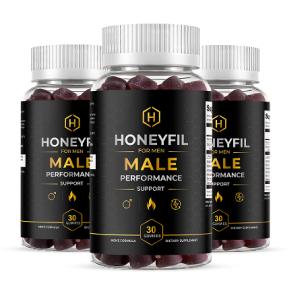
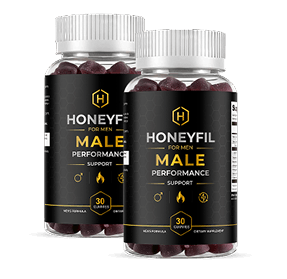
The formulation behind the product shown on this site uses six named ingredients: L-Arginine HCl, Tongkat Ali, Maca Root, Ashwagandha, Horny Goat Weed, and a Beet Root plus Grape Seed pairing. These are real, named botanicals and compounds — not a vague "proprietary blend" with no ingredient names attached, which is a meaningfully different and more transparent starting point than a lot of products in this category.
Each of these has a long history of traditional or supplement-industry use in men's formulas specifically, which is part of why they show up together here rather than being a random assortment. That said, "traditional use" and "clinically proven" are different standards, and we're careful not to blur them together anywhere on this site.
On L-citrulline, pine bark, and the alternate list
You may also encounter a different HoneyFil ingredient list elsewhere online, one built around Vitamin B3 (niacin), zinc, L-citrulline, L-carnitine, pine bark extract, maca root extract, grape skin extract, and saffron stigma extract. This is the formula referenced in some more recent label-focused coverage, and it's a real, separate list — not a typo of the one above.
We're not going to pretend this discrepancy doesn't exist or quietly pick whichever list sounds better. Formulations for supplements in this category can and do change between production runs, and different retailers or affiliate pages sometimes describe different versions. What we can tell you honestly: L-citrulline is generally studied for its association with nitric oxide production and circulation, and pine bark extract (often standardized as Pycnogenol) is generally studied for its antioxidant properties and circulatory support — both reasonable additions to a men's vitality formula, whether or not they appear in the specific bottle you receive.
It's worth noting that several ingredients actually overlap between the two published lists in spirit even where the exact names differ — maca root appears in both, and beet root plus grape seed in the current formula serves a similar circulatory-support role to grape skin extract and pine bark extract in the alternate list. That overlap doesn't resolve the discrepancy, but it does suggest the overall formulation direction — circulatory and energy-metabolism support through named botanicals — has stayed reasonably consistent even as the specific ingredient roster has apparently shifted.
What each ingredient is traditionally associated with
L-Arginine HCl — an amino acid compound traditionally associated with supporting healthy circulation.
Tongkat Ali — a traditional Southeast Asian root extract studied for its association with male vitality and stamina.
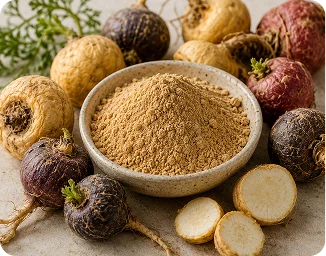
Maca Root — a Peruvian root long used traditionally to support stamina and everyday energy levels.
Ashwagandha — an adaptogenic herb studied for its association with the body's stress response and general wellness.
Horny Goat Weed — a traditional botanical extract associated with male vitality support in traditional use.
Beet Root & Grape Seed — a pairing traditionally associated with circulatory support and everyday antioxidant intake.
None of these ingredients are unique to HoneyFil — they're widely used across the men's supplement category, individually and in combination, which is one reason it's possible to speak to their traditional and studied roles even while being careful about specific dosage claims for this particular product.
What isn't publicly disclosed
We are intentionally not publishing exact milligram dosages for each ingredient. Older marketing pages have listed specific figures in the past, but we can't currently confirm those numbers against the current physical Supplement Facts panel, and reproducing unverified numbers here would be dishonest. If a page you find elsewhere states an ingredient is included "at the dose used in clinical studies," treat that claim with real skepticism unless it's backed by the actual label.
This isn't unique to HoneyFil — it's a broader pattern worth watching for across the men's supplement category generally. A specific-sounding dosage number on a sales page means little if it can't be cross-checked against the label of the product actually shipped to you. Our approach is simply to say so directly rather than print a number we can't stand behind.
How to verify what's in your bottle
The single most reliable source for what's actually in your HoneyFil bottle is the physical Supplement Facts panel printed on it. Packaging and formulations can change over time, and a website — including this one — is not a substitute for reading your own label before you start taking any supplement, especially if you're managing a medical condition or taking prescription medication.
If you want to go a step further, our companion guide on how to read a Supplement Facts panel walks through exactly what each section of that label means, so you're not just looking at it — you're actually able to interpret it.